
“At the age of six, in my sand pit, I was building dams, tunnels and canals and I always knew I would be a water engineer.”
For Sequana’s Chief Engineer, Gary Crisp, that childhood instinct didn’t fade – it became the foundation of a career that has helped shape desalination from a contested concept into a cornerstone of global water security.
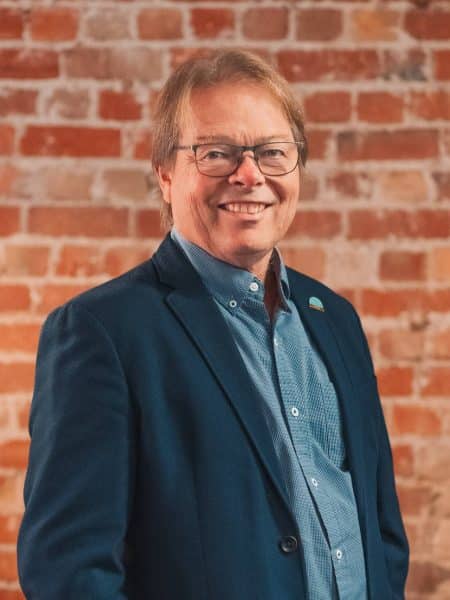
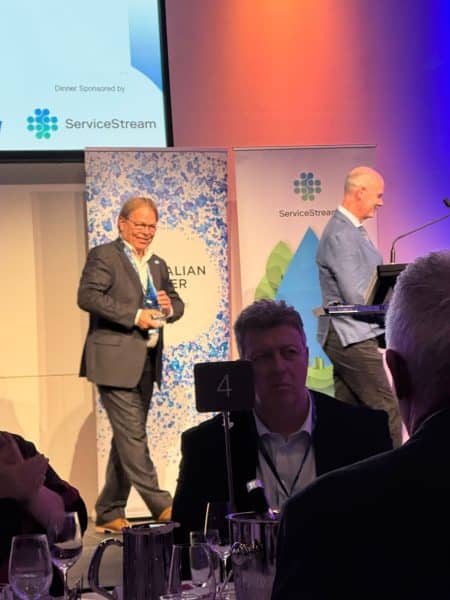
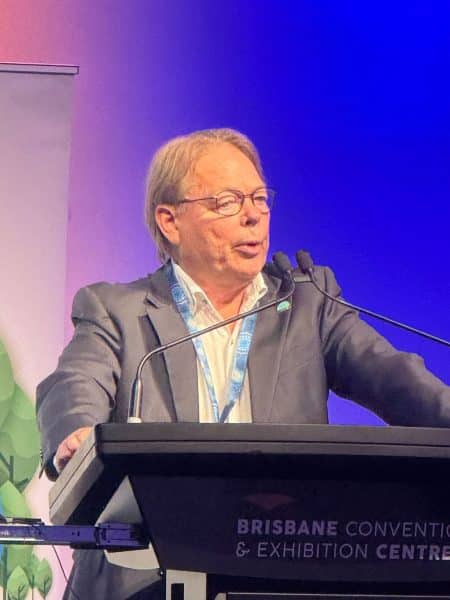
Now marking 30 years in desalination – within a broader career spanning more than five decades in water engineering – Gary’s story is not just one of longevity, but of foresight, persistence and influence at the forefront of an industry that has fundamentally changed how cities think about water.
Long before desalination entered the mainstream, Gary had already seen where the future was heading. In the mid-1990s, while working in Western Australia, he came across two formative influences: a strategic planning document, Perth’s Water Future, which suggested desalination might one day be required, and a detailed book cataloguing thermal desalination plants around the world.
“That’s what really fired me up,” he recalls. “It made it clear that desalination would become the long-term solution.”
At the time, Gary was leading the planning of the Stirling–Harvey Scheme – one of the largest water infrastructure projects undertaken in Western Australia in a century. Yet even then, his thinking was already shifting beyond traditional surface water solutions.
That conviction would go on to define his career.
Over the next three decades, Gary played a central role in shaping Australia’s desalination landscape. In 2000, he prepared Water Corporation of Western Australia’s Strategy for Desalination – a pivotal piece of work that helped establish climate-independent water supply as a strategic priority. From there, his involvement extended across every major desalination project delivered by the Corporation, as well as landmark facilities across Australia, the United States and beyond.


His project portfolio now spans more than 20 seawater reverse osmosis plants, including 10 large-scale facilities, along with numerous brackish water and advanced water recycling projects. Among these, the Perth Seawater Desalination Plant stands out as a defining experience.
“I was involved from the earliest planning and public engagement stages right through to delivery,” he says. “Helping guide the project from 11 contenders down to a final solution – and pushing for the adoption of energy recovery technology – made it incredibly rewarding.”
But Gary’s impact has never been limited to project delivery. Throughout his career, he has also been a persistent advocate for desalination in the face of significant resistance. In the early years, concerns around energy consumption, environmental impacts and marine ecosystems made desalination a highly contested solution – particularly in places like California.
“I presented in some very hostile environments,” he recalls. “There were strong views around environmental damage, intake impacts and energy use. But over time, through evidence and demonstration, those perceptions began to shift.”
It’s probably the most significant technological breakthrough I’ve seen in my career.
That shift has been supported not only by experience, but by major advances in technology. Of these, Gary points to one in particular as transformative: the Energy Recovery Inc. Isobaric Pressure Exchanger.
“It fundamentally changed the efficiency of seawater reverse osmosis,” he says. “It’s probably the most significant technological breakthrough I’ve seen in my career.”
Moments like these have defined a career that has operated at both technical and global levels. One of the more memorable highlights came not on a project site, but in New York’s Times Square, where Gary was invited to participate in the NASDAQ listing of Energy Recovery Inc. and present to international investors – a reflection of how far desalination had come as an industry.
Today, that evolution is undeniable. What was once controversial is now essential. Cities such as Perth already rely on desalination for more than half their water supply – a figure that continues to grow – and similar patterns are emerging globally.
Looking ahead, Gary is unequivocal about where things are heading.
“Seawater reverse osmosis will become the primary long-term water source for arid and semi-arid coastal cities,” he says. “Nothing will replace reverse osmosis when it comes to salt removal.”
But the future of desalination is not just about large coastal plants. Increasingly, the focus is expanding to include inland applications – particularly for mining and industry – as well as decentralised systems that can support regional and remote communities. Advances in renewable energy integration are also helping to unlock new opportunities, bringing desalination and water reuse closer to being viable at a global scale, including in developing regions.
long-term water source for arid and semi-arid coastal cities
At the same time, the challenges facing the sector are becoming more complex. Clients are now grappling with issues that were barely on the radar a decade ago: PFAS removal, highly variable feedwater quality driven by algal blooms and turbidity, the integration of renewable energy systems, and the growing water and energy demands associated with data centres and AI infrastructure. Maximising recovery rates and exploring brine valorisation are also emerging as critical areas of focus.
These evolving challenges are shaping not just technology, but the way projects are conceived, delivered and operated.
For Gary, this is where Sequana plays a critical role.
“Sequana engages with clients at a very high strategic level,” he says. “There’s a trust and enthusiasm that comes through in how we work – and that makes a real difference.”
As the industry continues to evolve, he sees Sequana’s role as helping clients navigate this increasing complexity – integrating emerging technologies, including AI and advanced treatment processes, while continuing to optimise delivery models, operations and financing approaches.
Underlying it all, however, is the same belief that first took shape decades ago.
When asked how he hopes to be remembered, Gary’s answer is characteristically straightforward.
“My enthusiasm and advocacy for desalination – knowing early on that it would become essential.”
From a sandpit in South Africa to shaping water strategies across continents, Gary Crisp’s 30-year journey in desalination is a story of vision, persistence and impact, and one that continues to influence how the world secures its most critical resource.
To learn more about desalination in Australia and Sequana’s role in delivering complex water infrastructure, download Sequana’s latest report here.
Download PDF: AUSTRALIAN DESALINATION MARKET OUTLOOK & OPPORTUNITIES