
As water security challenges intensify around the world, desalination is once again moving to the forefront of strategic infrastructure planning.
Growing populations, changing climate conditions and increasing pressure on existing water sources are driving governments and utilities to consider new ways of securing reliable, climate-resilient water supplies.
While technology continues to advance, one question is becoming just as important: How should these projects be delivered?
The answer extends well beyond engineering. Procurement strategy, commercial frameworks and risk allocation will play a defining role in determining whether these projects deliver long-term value. Most of what a project will ultimately cost is decided long before construction begins, and those early decisions are the hardest and most expensive to unwind.
Australia’s experience provides valuable lessons.
Desalination demands a different commercial approach
Large-scale desalination projects are unlike many other infrastructure investments, with specific considerations including energy costs and exposure to energy-market volatility, long-term water demand, integration with the wider water supply system and community acceptance.
They require significant capital investment years before a single litre of water is produced. Assets are expected to operate reliably for decades, often over 25 to 40 years, while balancing complex technical, environmental, regulatory and operational requirements.
These characteristics mean procurement decisions have lasting consequences.
Selecting the right delivery model is not simply about financing a project. It is about creating a commercial structure that encourages innovation, supports long-term performance and allocates risk to those best placed to manage it.
The evolution of partnership models
Public Private Partnerships (PPPs) have been an important part of Australia’s major infrastructure landscape for decades. Traditionally, PPPs have enabled governments to access private sector expertise while integrating design, construction, financing, operations and maintenance within a single long-term commercial framework.
But today’s infrastructure environment is different.
Projects are larger and more complex. Supply chains are under pressure. Construction costs have increased. Regulatory expectations continue to evolve.
As a result, procurement models are evolving alongside them. Increasingly, the conversation is shifting from simply transferring risk to creating partnerships that better align incentives and improve project outcomes.
The question is no longer: “Who carries the risk?”
It is: “Who is best placed to manage it?”
That distinction is reshaping infrastructure delivery.
Smarter risk allocation creates better outcomes
One of the most important lessons from global infrastructure delivery is that transferring every possible risk to the private sector does not necessarily create better outcomes. In fact, the opposite is often true.
Risk transferred is not risk reduced. Where risks are allocated to parties that cannot reasonably manage or price them, projects become more expensive, procurement becomes less competitive and collaboration suffers.
The strongest commercial models recognise that different organisations are best equipped to manage different risks.
Construction, financing and operational performance may sit most effectively with delivery partners.
Demand forecasting, long-term policy and broader regulatory settings often remain with asset owners.
Some risks, including force majeure or significant legislative change, are best managed through shared commercial mechanisms that preserve long-term project viability.
Good allocation also starts before the contract. The strongest programs reduce, quantify or consciously allocate uncertainty before it reaches the market, and test the proposed allocation through early market engagement rather than assume it will be accepted. Unresolved uncertainty is either priced unfavourably at bid or returns later as a commercial issue.
Effective partnerships are not built on transferring risk.
They are built on allocating risk intelligently.
Market capacity matters too
Risk allocation does more than influence price. It shapes bidder appetite, and for large desalination programs market capacity is often the principal procurement risk. If risks are difficult to manage or price, capable organisations may decide not to bid at all. The same applies when procurement processes become unnecessarily complex, burdensome or fragmented: competition can narrow before a project even reaches delivery.
For major investment programs, packaging and sequencing matter as well. A pipeline of related projects should be considered as a coherent program, not simply as a series of disconnected procurements competing with one another, and with other infrastructure sectors, for the same specialist skills, supply-chain capacity and capital. Simpler, more coordinated procurement can improve market participation without weakening commercial discipline. Standard, market familiar terms help for the same reason: they are quicker to review and accept, whereas bespoke agreements extend negotiation and erode bidder confidence.
Procurement is becoming a strategic decision
Australia’s more recent infrastructure programs demonstrate how procurement continues to evolve.
Collaborative commercial mechanisms, greater cost transparency and shared incentive structures are increasingly being incorporated into major projects to improve outcomes while maintaining accountability.
This evolution reflects a broader shift in thinking.
Procurement is no longer viewed simply as a contracting exercise.
It has become a strategic decision that shapes project performance long before construction begins, including whether the market can engage efficiently, whether capable bidders choose to participate and whether scarce delivery capacity is used coherently across a programs
Whether the preferred model is PPP, DPC, Alliance, Early Contractor Involvement (ECI) or another hybrid approach, the objective remains consistent: Align commercial incentives with successful project outcomes.
What this means for the next generation of desalination
As governments and utilities plan the next generation of desalination infrastructure, there is an opportunity to build on the lessons of previous projects rather than simply replicate them.
Future projects will need to respond to changing regulatory environments, renewable energy integration, increasing environmental expectations, digital operations and greater community scrutiny.
Success will depend not only on engineering excellence, but on selecting procurement models that balance commercial discipline with delivery flexibility.
The questions project owners should be asking are not simply: Can this project be delivered through a PPP?
Instead, they should ask:
- Which risks genuinely create value when transferred?
- Which risks should remain with the owner?
- Has uncertainty been reduced, quantified or consciously allocated before it reaches the market?
- How can commercial structures encourage collaboration rather than contractual conflict?
- Is the procurement process proportionate and simple enough to attract capable bidders?
- How can procurement support whole-of-life asset performance rather than simply minimising upfront cost?
- Are related projects packaged and sequenced as a coherent program rather than competing for the same skills, capacity and capital?
These questions are becoming just as important as the engineering solutions themselves.
Sequana’s perspective
At Sequana, we believe procurement strategy is one of the most important enablers of successful large scale infrastructure delivery. We advise from the owner’s side only. We hold no design or construction interest, so our advice on procurement structure and risk allocation is never shaped by a second agenda.
Our team has advised governments, utilities and private sector partners across major water infrastructure projects using a range of delivery models, including PPP, BOOT, D&C and collaborative contracting, and understands that successful projects begin with selecting the right commercial framework as much as the right technical solution. That includes designing procurement that the market can realistically respond to: clear in its objectives, disciplined in its risk allocation and proportionate in its complexity.
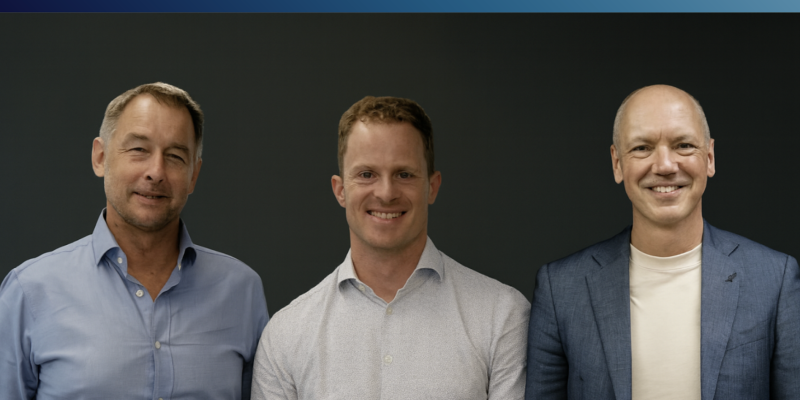
This article reflects the collective experience of Sequana’s strategic advisory team, including leaders who have advised government and delivered some of Australia’s largest water infrastructure projects, including various desalination projects in Western Australia and the Victorian Desalination Project, major PPP programs and complex capital delivery initiatives.
As countries continue investing in long-term water security, Australia’s experience demonstrates that the future of infrastructure delivery will not be defined by whether projects are public or private.
It will be defined by how effectively governments, utilities and industry work together, and by the quality of the decisions they take before a reference design exists, to deliver outcomes that stand the test of time.